

As I scroll through my curated news feed on my Android phone when I tap on the Google icon these days, I am enamored by the clutch of online article suggestions that are presented to me. For the uninitiated, much of our feed on Google or even on social media channels like Facebook or even LinkedIn is determined by our online behavior of what we have searched for or what content we have engaged with in the past.
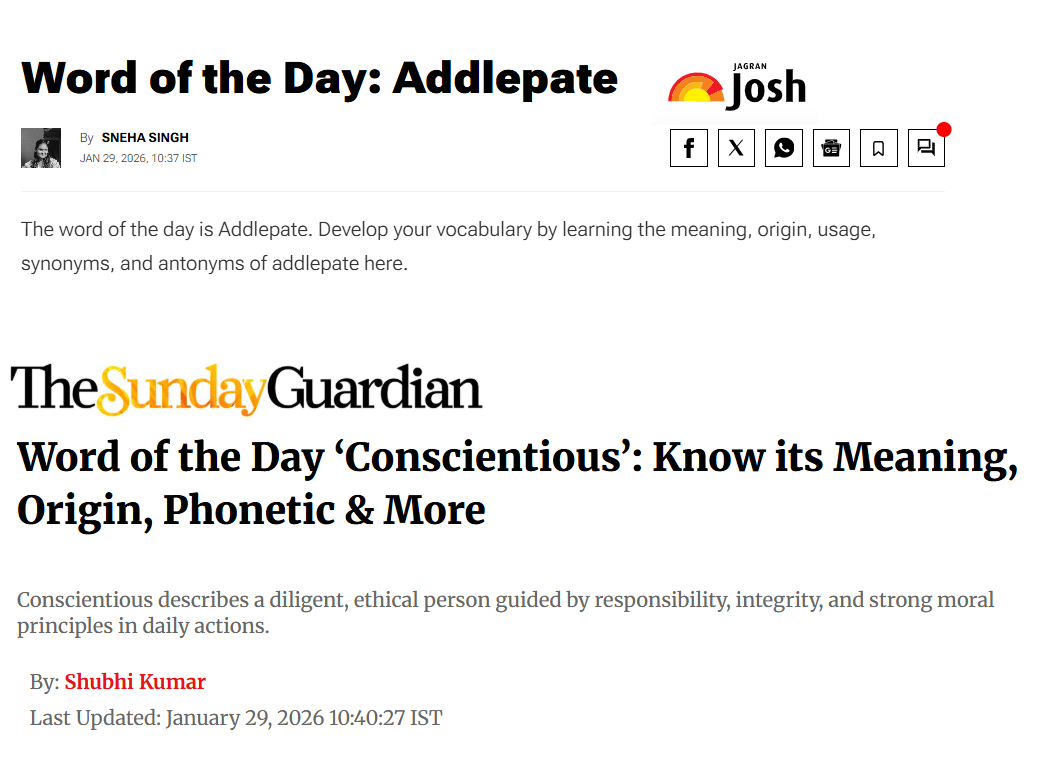
As the founder of an EdTech venture which has developed a patented AI-powered digital tool called Glibzter Immersive aimed at helping students and young working professionals enhance their spoken English skills by improving their contextual usage of English words and phrases; my news feed these days is replete with "Word of the Day" articles appearing on online portals of The Times of India, The Economic Times, Moneycontrol.com, Jagran Josh, The Sunday Guardian, The New Indian Express, and off course The New York Times.
Sample these screenshots:
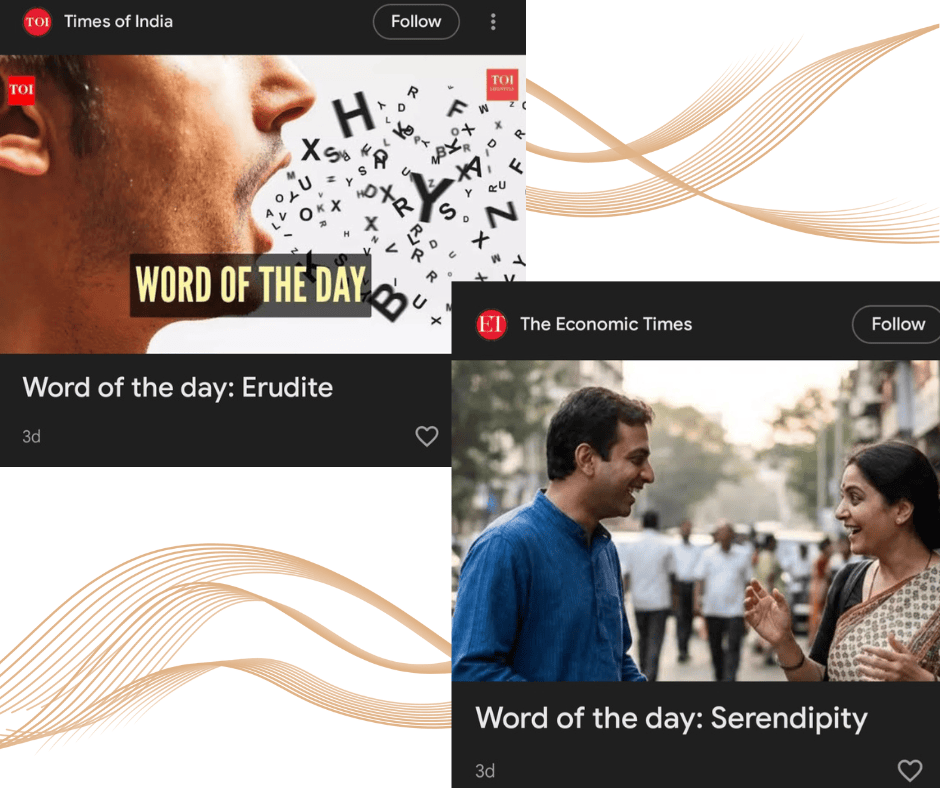
R.I.P the Good Old English Dictionary?
For millennials like me, as well as for the generation of people born before the 80's who were keen to improve their proficiency in English, the Oxford English Dictionary was our go-to resource if we did not know the meaning of a word while reading a book or an English daily newspaper that would be a staple diet for our minds.
All this at a time when we had no smartphones and neither the internet.
To pass time or to even enrich our minds, we'd rack our brains trying to solve the Crossword puzzle or even play the board game Scrabble if we had friends or relatives over. The blue covered Oxford dictionary was that ally we could bank on whenever we found ourselves stuck while engaging in such activities. Voila! We'd even discover a new word or two in the process.
Post the turn of the century, we saw the Dictionary evolve into its online avatar. Sites such as Dictionary.com, Merriam-Webster and TheFreeDictionary.com became prominent along with the online versions Oxford English Dictionary (oed.com), Cambridge, and Collins. Once smartphones became ubiquitous, the tech-savvy lot began Googling the meanings of words instead of downloading a Dictionary app or referring to the physical book.
The Evolving Business Model of Dictionary Publishers
If people are no longer referring the physical dictionary, and if there is a marked shift towards Googling the meaning of a word or phrase, then what explains the business rationale of keeping the online avatars (be it apps or websites of dictionaries) running?
While most are advertisement-backed and display programmatic ads (banner ads especially) to high intent visitors, brands will be willing to display and pay for these ads only if there are a sizeable quantum of visitors. That explains why you have the annual ritual of such dictionary publishers coming up with the Word of the Year for boosting traffic and to get brands on board to advertise on their platforms.
In an increasingly AI-powered world we are living in, dictionaries sell access to their APIs (Application Programming Interfaces) to developers of Large Language Models (LLMs) and translation software catering to their need for high-quality, structured linguistic data to train their algorithms.
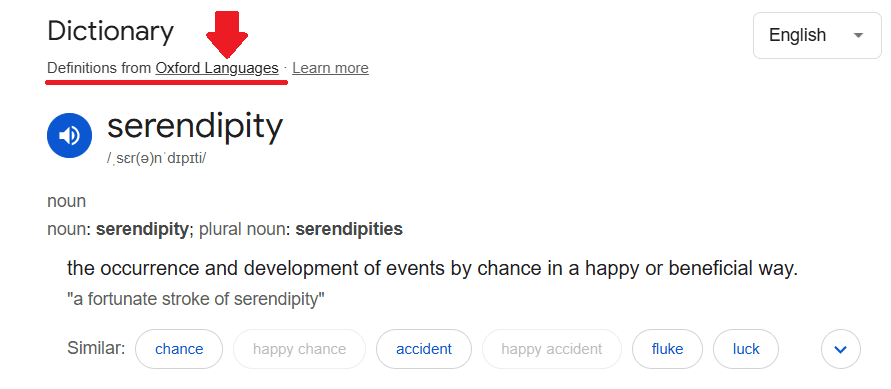
Here's the surprise! When you search for a meaning of a word on Google, it gets the definition from licensed companies that compile dictionaries. Oxford Languages in this case. Oxford University Press pricing of enterprise level APIs start at £5,000 ($6,300) per year, per language.
Dictionaries also make money by licensing their data to power "meaning of the word <XYZ>" searches on search engines like Google; word puzzles and games on mobile gaming apps; as well as enabling digital references to word and phrase meanings on devices such as Kindle. Such licensing makes dictionary publishers pocket an estimated US$ 1 - 5 million on a yearly basis.
All in all, the business model of dictionary publishers has undergone a tectonic shift from selling a physical product to a service of selling data and access making it an estimated US$ 4.39 billion industry growing at a CAGR of 13%.
Pedagogical significance of "Word of the Day"
Most of you Anglophiles reading this blog I believe would have at some point in time subscribed to a "Word of the Day" daily email or have a mobile app equivalent for this.
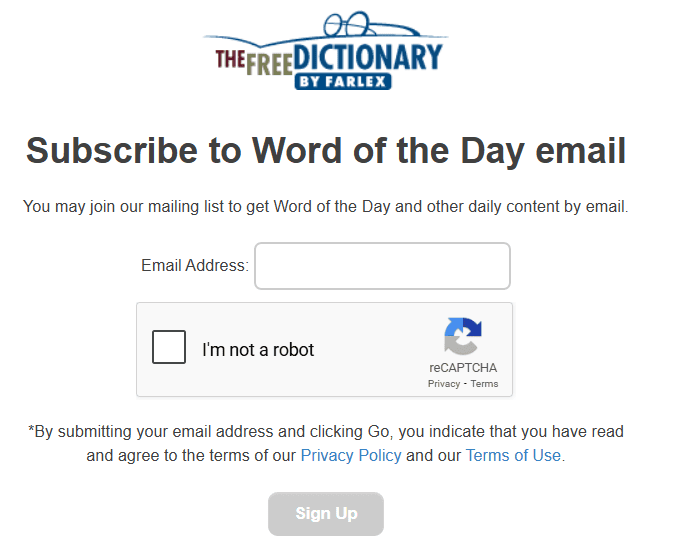
Learning new words enables us to better articulate ourselves through writing and speech. The "Word of the Day" helps us not just expand our vocabulary, but also keep ourselves in sync with new slangs and cultural shifts in terms of the contextual usage of the words.
Most of these ''Word of the Day" emails would have these in common:
- Definition - Meanings of the word according to its usage in different parts of speech (as a noun, verb, adjective etc.)
- Etymology - Word origin
- Pronunciation - Syllabification i.e. breaking words into smaller, spoken parts based on vowel sounds and often accompanied with an audio feature
- Imagery - Though not common, it is a wonderful addition that aids in word and context retention and recall.
- Synonyms & Antonyms - Words having the similar meanings (synonyms) and words which are opposites (antonyms)
- Usage examples - 2-3 sentences as per its different meanings and part of speech.
Online News Portals and the "Word of the Day" Syndrome
This blog started with screenshots of "Word of the Day" article recommendations I get in my Google news feed. The first question that hit my mind was "Why are news portals getting to reinventing the wheel so to say, when readers have other options for digital references of words and phrases?"
Portals such as The New Indian Express explicitly mention that their "Word of the Day" feature has been created collaboratively by AI and human editors to ensure originality, clarity, and meaningful learning. Most of the other Indian news portals have an editorial name associated with each article.
They seem to be following the lead of The New York Times which started its "Word of the Day" vocabulary offerings in the year 2021 with definition content and quizzes sourced from Vocabulary.com.
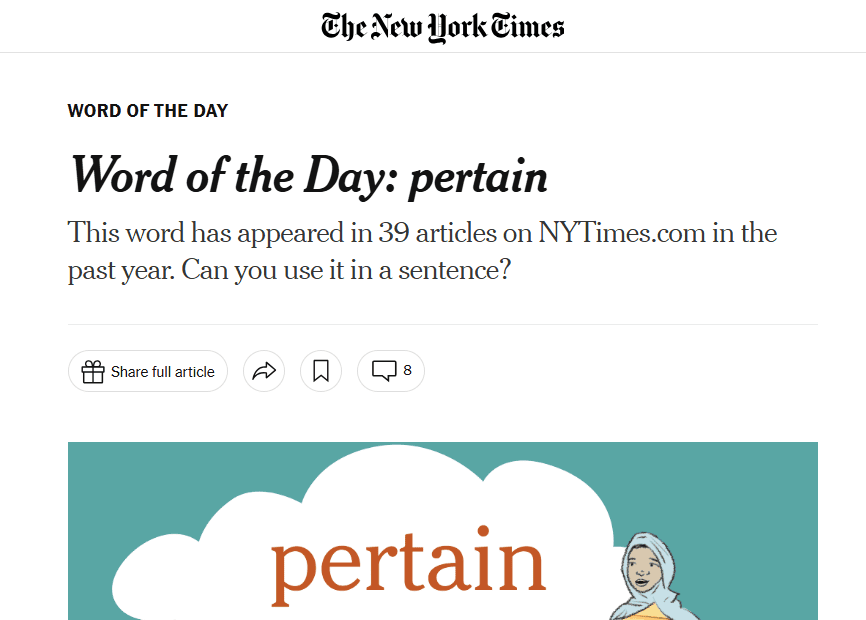
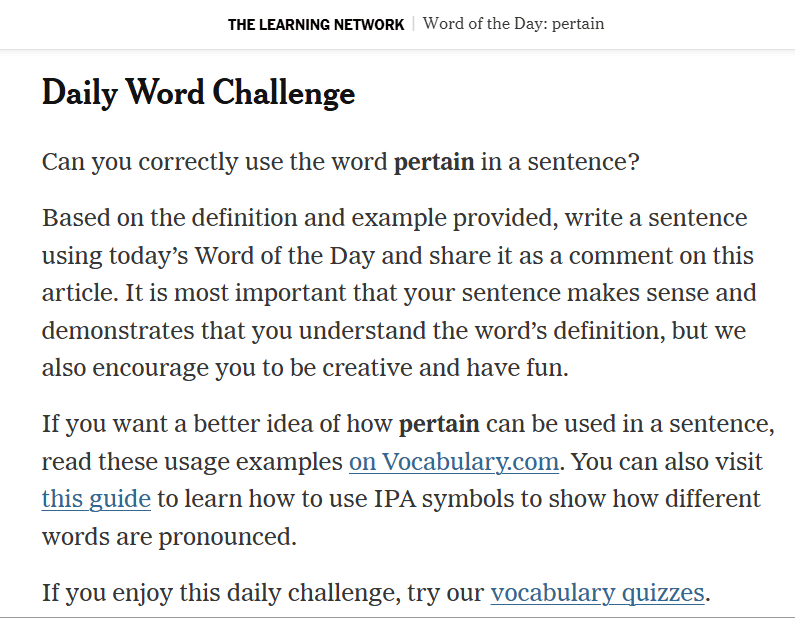
Having been a Media Relations professional for nearly a decade, I can tell you that what's at play over here is a masterclass in modern digital retention strategy to fight hyper peer competition and the plague of doom-scrolling.
Analysis of the Business Rationale
#1 Better Digital Discovery through SEO, AEO and GEO
- SEO (Search Engine Optimization) secures better rankings on Search Engine Results Pages (SERP), and traffic to the website
- AEO (Answer Engine Optimization) targets snippet answers on Search Engine pages for questions such as "What is the meaning of <WORD>?"
- GEO (Generative Engine Optimization) shows content from your website in responses to queries on ChatGPT, Gemini, Perplexity and other GenAI platforms.
Search Engines reward news websites which churn out new authoritative content with better search rankings, and enable news sites capture "top-of-funnel" traffic. I'd love to see tailored vocabulary offerings based on professions (medical, legal, business etc.) that these news portals can cater to.
#2 Word Games as Engagement Magnets
The New York Times today earns a significant chunk of its advertisement and subscription revenues more by being a gaming company than a news media publisher. The acquisition of the Wordle game validates the immense value of this product-led GTM, which generated a massive, engaged user base without any traditional advertising.
Add to the portfolio other word based games and puzzles such as Connections, Strands, and the vocabulary-building Spelling Bee, you get a great set of engagement magnets which create a habit loop for the users who'd visit The New York Times not just to read news, but also get a dopamine kick by engaging in games. The upshot? Better retention, better ad or subscription based revenues that go Ka-ching!
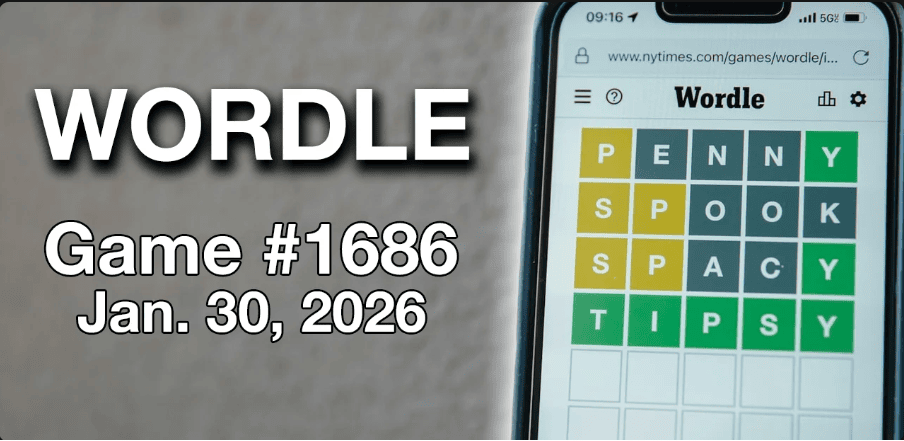
My prediction? Don't be too surprised to see publications and portals of The Times of India and The Economic Times to come up with word games and puzzles that go beyond the traditional Crossword puzzle, Scramble or the Spellathon.
In conclusion, words form the building blocks of the languages we speak and play a significant role in determining the impact we create through our communication. While the "Word of the Day" articles and subscription mails do help readers expand their knowledge and improve the contextual usage of words on one hand, online news portals are transforming themselves to become 'One-Stop' digital destinations for self improvement through information (news), knowledge (vocabulary) and entertainment (games).
From a pedagogic standpoint, it is my belief that the efficacy of such engagements would be high provided there is application in the form of creating practical opportunities for the usage of words which you as a reader pick up while reading news or even while streaming online videos.
Install Glibzter Immersive - English Vocabulary Builder web browser extension on your Chrome, Microsoft Edge, Perplexity and Ulaa browsers to enhance and assess your English vocabulary while reading online news and streaming online videos with subtitles.